Tampilkan postingan dengan label mobile. Tampilkan semua postingan

Selasa, 22 Februari 2011

e-wallets car in mobile phone

BARCELONA, Spain--Later this year you'll be able to pay for clothes, taxi fare, and dinner with your mobile phone and leave your credit cards and cash at home.

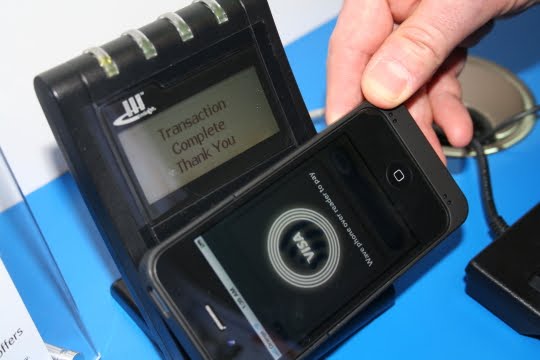
Visa is planning a commercial rollout in the U.S. in the second half of this year of a service for allowing allow people to turn their existing smartphones into electronic wallets. It uses Near Field Communication (NFC) short-range wireless technology and includes real-time anti-fraud alerts and other features designed to protect consumers from fraud, Bill Gajda, global head of Visa Mobile, told CNET in an interview at Mobile World Congress 2011 here this week. Visa was demonstrating its PayWave mobile payment system at the show.

Despite the promise of convenience and ease of use, the e-wallet industry has gotten off to a sluggish start as mobile handset makers have dragged their feet on adopting NFC technology and retailers saw no need to install mobile payment readers if the phones weren't yet equipped. In 2008, the GSMA, a trade association representing the Global System for Mobile Communications industry, called on manufacturers to embed NFC chips in phones by late 2009 and three years later they are trickling out.

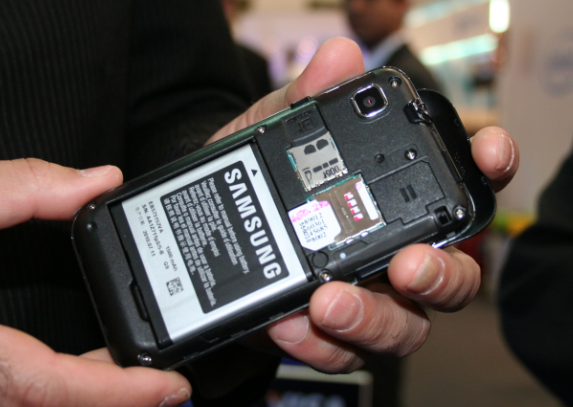
Rather than wait, Visa is offering a way to use existing smartphones by inserting a microSD (Secure Digital) removable memory card into the SD slots in the back of phones and, for the iPhone, in a special plastic skin. The card works in conjunction with Visa's PayWave downloadable app. Wells Fargo, Chase, U.S. Bank, and Bank of America have trials going with the technology in the U.S. (Another interim solution has been stickers affixed to mobile devices that allow for payments.)

"People don't want to wait two years for NFC-enabled phones to come out or to switch phones," to get one with an NFC chip sooner, Gajda said. "You can make payments today on the iPhone 4."

The terminal reader device is based on standardized technology so that it can work with Visa's PayWave system as well as MasterCard's PayPass and Express Pay from American Express. At this time, only Visa is offering an external memory card solution so phones that don't have NFC chips yet can be used--which is key to jumpstarting user adoption, according to Gajda.

"NFC technology will take off in 2011," he predicted. "The move from leather wallets to mobile wallets will come this year."

In trials, people are using their smartphones to pay fares in 10,000 taxi cabs and CVS stores in New York City and McDonalds and Whole Foods in San Francisco, and to ride public transit in New York and Los Angeles. (Search for cities and participating merchants here.)

Mobile payments are being made on iPhone 3 and 4, various BlackBerry models, and Samsung's Android-based Galaxy S II (displayed at Mobile World Congress 2011). NFC chips also could make their way into Windows-based phones made by Nokia, according to the NFC Times.

Google added some NFC capabilities to Android in an update earlier this year and reportedly is working on a mobile wallet code-named "Cream" that will be integrated into NFC-enabled Androids, while the Nexus S has NFC technology but does not support payments.

Meanwhile, Apple is rumored to be looking into adding NFC chips to a future version of the iPhone, according to reports.

NFC mobile payment systems have made some inroads in other countries, primarily Japan and Korea, while Brazil, India, and other countries will be adopting them over the next few years, Gajda said. Visa Europe has an SDcard solution trial for iPhone users in Turkey and is launching it in Europe too.

"We see contactless (mobile payments) as a leapfrog technology for many parts of the world," Gajda said.

With PayWave, the mobile payments can be charged to a user's credit card or debited from a bank account or a pre-paid account. Banks and retailers can also deliver coupons and other products and services to users via the system.

Here's how it works. A bank or other financial institution will distribute the microSD cards to customers who install them in an SD slot in the back of the phone under the cover. The customers then download the PayWave app to their smartphones.

When the customers see a terminal reader that accepts mobile payments, they open the app and click a button to start a transaction. On the iPhone, a swipe of a finger on a slider button activates the radio antenna. The customers then position the back of the phone directly in front of the reader to complete the transaction.

Safer than plastic?
But is it any safer than using a plain old credit card? Yes, Visa and others say. Anyone can swipe a credit card or steal the credit card number off a charge slip. Credit cards can also be cloned and skimming devices and videocameras hidden in ATMs and gas station terminals can snatch both the credit card number and the PIN.

The PayWave system has a number of features to protect against fraud and abuse. For instance, the system monitors activity in real time and can alert a customer within minutes of a suspicious transaction. It looks for anomalies in account activity and analyzes transaction size, merchant, and other information and then compares that with prior account activity and other transactions taking place on the Visa network.

The NFC chip has a secure component that generates a unique authentication code for each transaction, whereas the data on a magnetic stripe on a credit card doesn't change. The phone must be 2 to 4 centimeters from the reader to work, making data interception extremely difficult, Visa says. Also, the radio transmitter turns off after about eight seconds. And password-protected phones add an additional layer of protection for lost or stolen devices. (In the Visa Europe implementation a user is prompted for a password to use the PayWave app.)

Mobile security expert Collin Mulliner had done research on ways to attack NFC mobile phones in 2008, (PDF) but after talking to Visa and its microSD development partner at the show, he said the theoretical attacks he disclosed previously would not work on Visa's current implementation.

However, Mulliner wondered if it would be possible for someone to create a Trojan horse that, once lodged inside a phone via a malicious Web link or download, could hijack transactions. Such malware could conceivably create an encrypted tunnel so that when the phone is used for a transaction, the attacker is actually using the process to make a different transaction elsewhere at the same time. This scenario would not need an attacker to build a fake ATM terminal, as other NFC attacks would require, Mulliner said.

"It seems fairly secure," he said of Visa's implementation, but said he would need to do tests on a PayWave-enabled phone before deciding how secure he thinks it really is.

In response to security concerns, Deepak Jain, chief executive of microSD Visa technology partner DeviceFidelity, said attacks would be unlikely and that there are numerous barriers in place to prevent them. The digital keys used in the authentication system are encrypted on the chip and neither the three-digit security code on the back of credit cards nor the cardholder name are stored on the microSD card. Unauthorized apps can not communicate with the device, and no digital keys are stored in the app--they come from the Visa network, he said.

The microSD card PayWave systems "are much more secure (than credit cards) because if you lose the microsSD there is no way to find your credit card number unless you create a sophisticated attack," Jain said.

Karsten Nohl, who has exposed security weaknesses in RFID (radio-frequency identification) wireless smart card chips and mobile phones, said in an e-mail when asked for comment: "NFC is just another name for RFID and it carries the same promises, opportunities, and weaknesses as any other RFID incarnation...The protocol and encryption used--and whether they protect from common threats--is pretty much up to the solution architect. It's like the Internet: everybody knows it's an insecure channel; but several evolutionary technology waves have led to secure transaction protocols over the Internet. Let's hope NFC takes fewer iterations and years to become

Sabtu, 19 Februari 2011

How To Backup Sony Ericsson Contact

Simply explore your SonyEricsson or Android phone !

Connect your phone via cable, bluetooth or infrared and you'll be surprised how easy and efficient you can manage your phone with this compact software. Since it's first appearance MyPhoneExplorer evolved into the most popular freeware tool for SE-phones and is constantly extended by new features. Since version 1.8 MyPhoneExplorer supports also Android-based phones (connected via WiFi or USB cable)

Features:

* Adressbook - with direct sync to Outlook, GMail, Windows contacts, Thunderbird, SeaMonkey, Lotus Notes and Tobit David
* Organizer with calendarview and direct sync to Outlook, Google, Sunbird, Thunderbird, SeaMonkey, Windows calendar(Vista), Rainlendar, Lotus Notes, Tobit David and net shared calendars (WebDAV, FTP, local)
* SMS - archive, export, import, excessive messages,...
* Filebrowser with cachesystem to minimize datatransfer, automatic photosync...
* Set phoneclock based on atomtime
* and much more. f.e.: calllists, edit profiles, control phone, memorystatus, phonemonitor,...

If you are using a Symbian-Phone from SE (f.e. P1i, M600i, W950i, W960i, G700, G900) please note: Its needed to install the PC-Suite first and the connection with MyPhoneExplorer is only possible throught USB-Cable.
There exists a few Low-Cost-Phones (f.e. T200i) which does not have a PC-Interface.

Download (4,2 MB)

Download old Version 1.7.6 (4 MB)
Download ZIP-Code-Database (0,8 MB)
Creating languagefiles for MyPhoneExplorer
Creating holidayfiles for MyPhoneExplorer

this software can use to backup your crash Sony Ericsson and recover all about information in your phone.


Backup and Recover Sony Ericson Contact

Jumat, 18 Februari 2011

second mobile revolution

A pedestrian walks past an advertisement for an iPhone 4 in Bangkok. Smartphones and tablet computers are driving a mobile revolution, allowing video to take the lead in a business once dominated by voice calls, industry players and experts say.

Smartphones and tablets are driving a mobile revolution, allowing video to take the lead in a business once dominated by voice calls, industry players and experts say.
Video already does or will soon account for the majority of mobile data traffic, according to companies that monitor traffic, and with the proliferation of tablet computers that is likely to increase.

"If you want to put 2011 into a nutshell you can say that for the mobile phone companies their business is changing from an ears business -- people speaking and hearing -- into an eyes business with people looking at little screens," said Stefan Zehle, CEO of Coleago Consulting.

Cisco chief John Chambers told the mobile industry's annual trade fair in Barcelona this week that the visual medium would soon become ubiquitous in mobile communication.

"It won't be fifty to sixty percent of traffic on networks in five years out that will be visual. It will be eighty to ninety percent. Everything you do will have visual capability."

Currently most of the visual traffic is video streaming, with video-sharing site YouTube the single top application accounting for 17 percent of total mobile data traffic, according to network firm Allot Communications.

However 2011 could be the year that video telephony finally takes off, nearly a half century after it was first invented.

Skype, which pioneered voice calls over the Internet, brought video calls to PCs in 2006 and says 42 percent of its calls are now video.

And now video calling is now moving to mobile handsets.

Skype launched last month video calling for the iPhone, and Apple has its own application, which is so far limited only to WiFi connections.

Another firm, ooVoo, now supports iPhones and smartphones running the Google-backed Android operating system for its free high-definition-capable video calling service.

ooVoo has gone from nine million users in January 2010 to 21 million last month.
"I really see 2010 as having been the tipping point for video calling," the company's chief executive, Philippe Schwartz, told AFP.

Stuck only to PCs, video calling would remain a niche service but "mobile is the enabler to make it mass market," he said.

US-based Syniverse Technologies announced this week at the Mobile World Congress a deal to provide a video calling service for Korea Telecom, the country's top fixed-line and second-largest mobile operator.

The service is highly interoperable as it does not require receiving handsets to have pre-installed software.

Another company, Aylus, announced a similar video calling service for operators which allows users to start conversations as audio calls and then freely switch over to video.

Both ooVoo and Aylus video calls can be made over existing 3G networks, and the video quality in demonstrations matched or exceeded PC video calls on fixed Internet conditions.

Not everyone is convinced video telephony will take off, however.

"I think the value for the end user to actually watch each other while talking is limited," said Magnus Rehle, managing director of Greenwich Consulting.

The consulting firm Deloitte said in a recent report it "believes that in 2011 video calling wil be cheaper, better and more widely available than ever; yet a boom in demand is unlikely."
Palestinians mobile phone users exchange images via their handsets. With many smartphones now equipped with high definition cameras, they are likely to become increasingly used as camcorders.
It said for most calls audio is sufficient for users, and that many remain uncomfortable with video calling as it makes them self-conscious.

However a Skype representative said people don't want to be bound to their PCs and that mobile video calls "give users the opportunity to share personal moments wherever they are and whenever they want."

Smartphone handset makers, as well as tablet manufacturers, would not be equipping them all with front-facing cameras if they thought video calling would remain a niche service, he said.

Skype's success with PC-based video calling showed "that if there is an easy and intuitive application to use to see the other party then there is a big number of people" willing to use it, said Aylus chief executive Mark Edwards.

Syniverse's Tony Holcombe said consumers have been ready for mobile video calling for some time, "but the key to unlocking widespread uptake is full-scale interoperability" so all camera-equipped phones can be called.

With many smartphones now equipped with high definition cameras, they are likely to become increasingly used as camcorders.

A company called muvee expects to start shipping this year on Android phones the first application for users to edit their videos directly on their smartphones.

"Whenever you film you always get a bunch of rubbish that you want to trim and cut out," said muvee founder and chief Terence Swee. "You don't want to go through the hassle of transferring video to a computer to edit, you want to do it on your phone directly and with muvee you can."

Kamis, 17 Februari 2011

most virtuous cell phones


Whether they consider it bling or just a tool, people typically buy phones based on features and carrier plans. But if you're looking to add benign environmental and societal impact to your feature wish list, GoodGuide has got the data.

GoodGuide launched on Thursday cell phone ratings that rank individual models and manufacturers on health, environment, and social attributes. The new category joins others already on the site, including cleaning products, food items, personal care products, and home appliances.

Click for expanded view of ratings.
(Credit: Screenshot by Martin LaMonica/CNET)

The ratings cover 576 phones and are based on publicly available information, said Chief Scientist Bill Pease. Altogether, 150 factors are scored and then rolled up into a single number that combines both product and company rankings. The higher the number, the more admirable the product and company.

Nokia phones hold the top spot with a model that contributes to a score of 7.7 out of 10. That's followed by phones from Samsung, Motorola, Palm, and Sony Ericsson. BlackBerry and its phones are at the bottom, with the lowest score a 3.3 out of 10. Phones from LG, Garmin-Asus, Casio, and Sharp contribute to scores that are largely between 4 and 5.

Apple's popular iPhones come in at the middle of the pack, with 5.6 for the iPhone 3Gs and the iPhone 4. People can drill down to see the performance on the individual factors that go into the aggregate score.

The case of Apple demonstrates how a product can do well in one respect but wind up with a lower score because of corporate practices or scant disclosure.

The environmental attributes in the GoodGuide methodology cover the phone's standby power consumption and its use of recyclable materials in packaging and in the phone itself. Products are given high marks when they don't use bromide flame retardants and PVC and when there is an environmental fact sheet for the product.

In that regard, the iPhone does well, scoring 8.5. But that product score is balanced against Apple's corporate environmental performance, which is 5. Apple's Society rating, which considers ethical policies around workers and sourcing of materials, such as so-called conflict minerals, is at 4.5.

By contrast, Nokia's overall high ratings benefit from good product scores and its corporate ratings, which take into account activities and disclosures around labor and human rights and company policy on conflict minerals sourced from war-torn regions.

Meanwhile, BlackBerry maker RIM has not been known for devoting a lot of time to corporate social-responsibility activities, which is one reason for the BlackBerry's lower-than-average score, said Pease.

More info please
GoodGuide did not include radio frequency emissions from cell phones in its health ratings since there isn't scientific consensus on the health risk (all phones comply with a federal standard), but consumers can pick the lowest emitting phones.

The ratings are not meant to be a certification, such as the Green Electronics Council's EPEAT. In fact, data gatherers at GoodGuide rely on third-party certification standards and watchdog groups, such as Greenpeace and the Electronics TakeBack Coalition. But the GoodGuide's ratings are designed to inform consumers' buying decisions, said Pease.

Compared with other product categories, the cell phone grouping has relatively few products that are marketed based on environmental and social attributes, Pease said. At the same time, there's a significant population that says it considers these factors when buying consumer goods.

"I've been surprised at the amount of information that isn't available," Pease said. "Few companies were even talking about what they were doing around the environmental or social issues associated with their production practices."

Cell phones appear to be one of those categories where environmental attributes don't count for much in buying decisions, but that makes it ripe for better information, Pease said. A consumer could, for example, make comparisons of recycling or take-back programs, hazardous materials, or energy efficiency when weighing a buying decision.

"You're sending a signal to manufacturers that consumers do care about getting some differentiation," Pease said. GoodGuide has plans to extend its electronics ratings into PCs and laptops.


Google on Nokia and Android

Google’s Executive Chairman, Eric Schmidt, has just finished his keynote speech at MWC 2011, during which he demoed some of the neat new applications that will be available on Android Honeycomb tablets, explained where Honeycomb sits between Gingerbread and Ice Cream, and presented some pretty amazing facts on the global adoption of Android.

He also had a little something to say about the Nokia/Microsoft deal.
Nokia and Android

After his talk, Schmidt was asked his thoughts on the Nokia/Microsoft deal and whether Google fought for Nokia to adopt Android.

“We would’ve loved if they chose Android…We certainly tried. The offer to adopt later is still open.”
Personally I can’t see Nokia ever adopting Android as it’s now become a subsidiary of Microsoft, but it’s an interesting insight into the politcal machinations that occurred prior to the Microkia announcement.

Selasa, 11 Januari 2011

megapixel camera for 2011

COLOGNE, Germany--For those who find Hasselblad's 60-megapixel H4D-60 camera a little too confining, the company plans to sell a 200-megapixel model in the first quarter of 2011.

The Copenhagen-based medium-format camera maker announced the product today at the Photokina imaging show here. Interestingly, it uses the same camera body as its current H4D-50MS, which will be upgradable, said Peter Stig-Nielsen, director of product development.

However, even in the rarefied air of the medium-format market, where image sensors are very large and very expensive, the 200-megapixel "extended multishot" technology won't appeal to everyone: each shot will take about 30 seconds to capture, restricting the camera to stationary subjects such as cars, watches, and jewelry.

That's because of the design of the Hasselblad multishot-series cameras such as the H4D-50MS. The current model uses tiny piezoelectric motors to shift the sensor a very small amount to combine two shots into one higher-quality image.

"We are now building it into a real product that's going to hit the market in the first quarter of next year," Stig-Nielsen said. "It is going to be an extension of the current H4D-50 multishot."

Most digital cameras capture color with a checkerboard of color filters called a Bayer pattern over image sensor pixels; each pixel captures only red, green, or blue color information. The multishot technology shifts the sensor so the same pixel can capture each of the colors, ridding the camera of the need to mathematically infer the missing values of red, green, and blue.

Hasselblad's new iteration of the technology, called extended multishot, moves the sensor only a half pixel in various directions, which protracts the multishot process from about 20 seconds to 30 seconds. But it quadruples the resolution of a 50-megapixel sensor.


Multishot and extended multishot modes aren't mandatory, of course, a move that would preclude the models from use in fashion photography, one of the biggest markets for this type of camera.

"The cameras we bring out will be able to work in all three modes at the touch of a button," Stig-Nielsen said.

One issue with a 200-megapixel camera is whether lenses can keep up with the tremendous resolving power. If not, they're just capturing blur more precisely. To that end, Hasselblad also announced two new lenses, overhauled designs that improve on earlier models.

First is the HC 50mm-II, an f3.5 model for 2,999 euros (about $4,006). Second is the HC Macro 120-II, an F4 model with a price of 3,420 euros (about $4570). Both are available immediately.

Older lenses will have some trouble keeping up with the 200-megapixel design. "The old models will still work, but they will not give you 100 percent resolution all the way to the corner," Stig-Nielsen said. With the new models, "you will see resolution all the way edge to edge."

Hasselblad underwent tough times, and more are ahead as full-frame SLR cameras from Canon and Nikon encroach on medium-format turf with advantages in cost, flexibility, low-light sensitivity, accessories, and ease of use. And Hasselblad has had trouble with customer service and delivering the cameras it promises.

But things have improved for Hasselblad.

"In the first eight months of the year, we have had a profitable turnaround," said Chairman Larry Hansen. The period has been "very successful for Hasselblad," he said.

Two factors in the company's better fortunes were an improving economy and restructuring that reduced Hasselblad expenses. But the biggest factor was the "the success of the H4D platform," he said.

Hasselblad's H4D is an integrated system that builds the sensor into the camera body like a conventional SLR. In contrast, earlier film and digital medium-format cameras use a removable back that lets photographers upgrade or change the sensor without changing the camera body.

The design shift hurt a Hasselblad competitor, Phase One, which manufactures such digital backs. Consequently, Phase One acquired a controlling interest in Mamiya, a venerable Japanese medium-format camera company, and sells its camera bodies under the Phase One brand name.

In addition, Phase One acquired another digital camera back maker, Leaf, which at Photokina announced a new 80-megapixel medium-format back.

In these markets, brand is still important even if sales are the merest sliver of the overall camera market. To that end, Hasselblad also announced it's building a limited series of 499 H4D cameras that draw on the clout of another boutique brand, Ferrari.

The special series of cameras sport the Ferrari logo and the gleaming red "rosso fuoco" color of new Ferrari sports cars.


Minggu, 05 Desember 2010

smartphones in December

f you're in the market for a new smartphone, you might want to keep a close eye on Best Buy's latest offer.

The company announced today that through the rest of December, it will be offering at least four models of smartphones for free in its brick-and-mortar stores, online, and in its mobile specialty shops. All four major carriers--Verizon, AT&T, T-Mobile, and Sprint--are included in the offer. The company said it decided to launch the program after enjoying a successful "Free Phone Fridays" campaign in October.

The devices Best Buy plans to offer include the HTC Droid Incredible, the LG Optimus, and RIM's BlackBerry Curve, among others.

But as with most deals, there is a catch. To get a free device, consumers will need to either enter into a two-year contract or upgrade their current line with a new two-year agreement.

Senin, 29 November 2010

Samsung M5650 Survey

Samsung M5650 Lindy structures design similar Corby S3650. The interface was also still relying on Cartoon UI, which has capacitive touchscreen TFT display as a primary access medium. In addition, Lindy M5650 panel also dedicate multimedia at the bottom line of the call / endcall to show multimedia capabilities.

The features, recorded The M5650 Lindy has better facilities than Corby Touch. Look the HSDPA network, to access the data can reach 7.2 Mbps. In addition, Samsung M5650 Lindy has also been equipped with track Wi-Fi connection beside Bluetooth and data cable MicroUSB.

In the entertain sector, this phone includes 3.2 MP powerful camera plus autofocus capability. There are also video and music player that has the ability to extract information about the song, via the Find Music feature recognition.

Samsung M5650 Lindy provides adequate facilities and attractive form of cool widget application for Facebook, MySpace and Twitter. The Services includes photo / video upload into the Youtube, Flickr, Picasa and Photobucket.

The plan, the phone will be marketed end of the year with an estimated price of 149 EURO.

Specifications:
Network: Quadband GSM and HSDPA 1900/2100 MHz; dimensions: 10.6 x5, 7×1, 2 cm Weight: 98 g; screen: 2.8 inch, TFT 262,144 color capacitive touchscreen, 240×320 pixels; Data transfer: HSDPA 7.2 Mbps, EDGE 10 , GPRS 10; Camera: 3.15 MP, 2048×1536 pixels, autofocus, video recording; Internal Memory: 50 MB; External Memory: microSD up to 8GB; messaging: SMS MMS, e-mail, IM;

Connectivity: Wi-Fi 802.11 b / g, Bluetooth v2.1 (A2DP support), microUSB data cable, 3.5 mm audio jack; Browser: WAP 2.0/xHTML, HTML;

Other Features: Polyphonic (MP3), MP3/WMA/eACC + player, H.263/H.264/MP4/WMV player, Find music recognition service, DNSe, social networking integration with live updates, Smart unlock, Cartoon UI, Dedicated music keys, wid RDS FM radio, java MIDP 2.0, Phonebook 1000 entries, Organizer, Document viewer, Voice memo, Speaker phone, Games; Battery: 960 mAh lithium ion; Standby: 300 hours, Talk time 3 hours

LG Apex Slide

LG Apex is U.S. Cellular’s latest high-performance, Android-powered device. The LG Apex, with its vibrant 3.2″ touchscreen and sleek, slide-out QWERTY keyboard, joins a string of cutting-edge products recently launched by the carrier, including the HTC Desire, Samsung Acclaim, Samsung Mesmerize (a Galaxy S smartphone) and the upcoming Samsung Galaxy Tab, slated to arrive in stores this month. The LG Optimus U will debut in December rounding out U.S. Cellular’s Android-powered offerings for 2010.
LG Apex Specs

LG Apex is a cool productivity tool that runs on Android 2.1 and features a 3.2-inch durable tempered glass touchscreen that responds to a feather touch with vibration feedback. The screen also boasts luminous sensors that adjust brightness depending on light conditions and shows off the dynamic, animated live wallpaper. Five customizable home screens allow customers to create shortcuts to their favorite apps and widgets. Its stylish and functional design offers a QWERTY keyboard that slides out to make typing and texting easy.

Backed by U.S. Cellular’s high-speed nationwide network, customers can browse and download thousands of applications in Android Market that allow users to customize their phone to fit their lifestyle. Customers can also access popular Google applications, including Google Maps™ with its turn-by-turn directions and Google Voice Search™ that helps them locate anything without a single key tap. The LG Apex’s 3 megapixel autofocus, flash-ready camera/camcorder comes with a panorama mode that lets customers take up to six side-by-side shots to build a sweeping view.

LG Apex is a Wi-Fi enabled phone also comes with an MP3 player, and customers can easily organize their music library, repeat and shuffle their favorite songs. They can even multi-task, playing music in the background while simultaneously e-mailing, texting or downloading videos. A video player is included for WMV, MP4, 3GP and 3G2 formats.
LG Apex Price

The LG Apex will retail for $80 after an $80 mail-in rebate and will be available Nov 19 at US Cellular locations.

New Nokia N8

The Nokia N8 comes with an array of applications such as free global Ovi Maps walk and drive navigation, making this the perfect substitution for a Satellite Navigation system. The Nokia N8 boasts to take you exactly where you want to be, it also features information on 70 worldwide destinations, making it a great handset for those that love to travel.

The Nokia N8 offers an impressive total of 16GB of in-built storage space, however, if you desire even more storage this is in fact expandable up to a total of 48GB, which is available via the use of a Micro SD card. This enables users to send and transfer large files to a memory stick through the USB On-the-Go device.

Such a declaration is offering developers a new platform to work from. The Nokia N8 also comes complete with Qt, which is a software development environment that in actual fact simplifies the development. Such software makes it possible to create applications just once and then organize them across other software platforms, such as Symbian for example.

In order to enable developers to start grasping the prospective of Qt, Nokia has also made the simple to use Nokia Qt SDK available in its initial form.

The Nokia N8 will be going live late in 2010 and will be released only to select markets.

The Nokia N8 introduces the global device unveiling of the new Symbian 3 software; such software features an assortment of major developments and improvements. These improvements include a total of three personal homescreens, each are easily scrolled through by a simple touch of the screen.

A selection of improved usability options are also available, which feature across the user interface and include elements such as ‘pinch-to-zoom’ options and single tap and multi-tap support motions. Due to the new 2D and 3D graphics architecture, both quicker and more amenable user interface is available; this takes complete advantage of the all-new hardware acceleration. More applications can be run alongside one and another due to the highly efficient memory management, allowing users to multi-task with ease.

If you’re looking to buy the new Nokia N8, then check out www.phones4u.co.uk and find yourself the best deal.

Powerfull BlackBerry

With the launch of the Blackberry Torch in August of this year, there was much talk of what new features would be introduced to the new Blackberry 6 web browser. The browser in Blackberry Torch, while not being viewed as the most important aspect of Blackberry’s impressive arsenal of features, is obviously an important part of a smart phone and the impressive browsers on Apple’s iPhone and on certain high end Android phones mean that Research in Motion have had to act on their latest model. RIT have seemingly not shirked from this responsibility and have introduced some impressive new features to their browser.

One of the key features of the browser which has been lauded by Blackberry’s spokespeople has been that of the browser’s integration with the social feeds application on the Blackberry Torch. Blackberry users have, for a long time been able to add RSS feeds to their browser. With Blackberry 6 though, this option has become a much more simple, engaging and fun experience, adding, finding and reading new feeds.

The “Browser Options” screen has also undergone a facelift with the previous incarnations being criticised for being hard to manoeuvre around and confusing. The new version has, along with having it’s look change, been streamlined by having options that are no longer required (mainly due to improvements in performance) removed meaning that the options section of the browser works a lot more smoothly and is more user friendly.

With the new and improved touch screen also, comes new and improved features that dramatically impact on the performance of the browser. The new browser is now a lot more interactive with users now able to zoom and pinch the interface using the touch screen with the browser now reacting a lot more smoothly than it has in the past. Also, in order to help users read content that is more text heavy RIM have introduced an Automatic Font Size Adjustment” feature which mean users can quickly resize and confine the web based content to the width of the screen.

To read the latest review on the Blackberry Torch, visit Dial-A-Phone and also check out the latest news on their superb mobile phone and technology blog.

Minggu, 28 November 2010

Futuristic touch screen puts the desk in desktop

The future just keeps getting closer and closer these days. Not only do we have iPhones with FaceTime--which, when combined with the iPod Nano (as I'm sure they will be before too long) will come pretty close to creating a mass-market version of Dick Tracy's 2-way wrist TV--we've also got robot cars and, ahem, robot journalists (which I'm trying to keep at bay by way of this terribly sophisticated and never-ending sentence--apparently the roboscribes have trouble with such Proustian gymnastics: Quick! They're coming for our jobs! Hand me another semicolon and an em dash!).

And too, we've got Minority Report-like gesture-driven interfaces and now this: a multiuser touch screen the size of a desk, which curves up to create a, well, desktop like the metaphorical one you may be staring at right now.

Cool!

I realize some of you will scoff at this device--whipped up by The Media Computing Group at Germany's RWTH Aachen University, and brought to my attention by Engadget--but I freely admit that it fires my imagination.

I can see it combined with the type of Wacom pen-and-tablet device that lets you "draw" directly on screen. As a sometime graphic designer, I'd be in nirvana. I could hunch over in a hard-working, tortured artist kind of way and draw a picture or manipulate a Photoshop file, save a version of it, and then whisk that version across the (horizontal) desktop to see it curve up onto the (vertical) desktop that would now be a perfect bulletin board.
(Credit: Media Computing Group)

I can see it incorporating the aforementioned gesture-driven technology to allow me to sit back and point at the drawings on my bulletin board to choose the ones I like: I could snap my fingers, say, and preserve those files; then--I don't know--dismiss the rejects with a disdainful backhanded wave and watch them burst into unbelievably lifelike flames courtesy of a supercharged graphics card or an up-and-coming 3D Web technology like WebGL. A client meeting was never so much fun! It's a multiuser device: I could set the client's favorite drawings ablaze, and she could ignite mine! We could create a new videogame! I'd let her win! I'd have to! She's now my only source of income--my journalism job having been stolen by R2-D2!

But enough of my overheated holiday-weekend imaginings; irrelevant asides about robots; and tiresome, tiresome, tiresome--tiresome--syntactical pyrotechnics. Why don't you take a look at the video and share with us your own brilliant vaporware in the comments section below?

(And, yes, I know, we've already had at least one real-life interpretation of the Dick Tracy gadget--and for a long time now. See? I told you the future just keeps getting closer. So close it's become the past. Feel free to point out if and where the technology mashup I've conjured already exists--and when it appeared.)

Sabtu, 27 November 2010

RIM Reports From India

BlackBerry maker Research in Motion says news reports suggesting that it's close to an agreement to provide India with lawful access to monitor and access network data are "inaccurate" and "misleading."
One story CNET found, published yesterday in the Indian paper Mint, quotes an unnamed senior official from India's Home Ministry who said that an agreement is near that would give the Indian government access to the encrypted data on RIM's BlackBerry Enterprise Service (BES).

"They have in principle agreed to provide us recorded data from their servers," the senior home ministry official said, according to Mint. "Now they have assured us that they will discuss the issue first among themselves and find a way to meet our demands. Later, they would be providing live access to BES."

The Mint story further said that RIM has already acquiesced to India's demand to monitor the BlackBerry e-mail service by giving the government manual access and will provide a final solution by January 31. Late last month, India called off a ban of BlackBerry services that was scheduled for October 31, citing an interim agreement reached with RIM. The Home Ministry also said at the time that RIM promised India it would offer a final solution by January 31, designed to give the government continued access.

But firing off a statement yesterday, RIM is denying and repudiating the new claims coming from the Indian media.

"RIM has once again found it necessary to address certain media reports in India containing inaccurate and misleading statements and information based on unsubstantiated claims from unnamed sources," the company stated. "Our customers can be reassured that the BlackBerry Enterprise Solution continues to be the gold standard for security-conscious organizations in India and worldwide. All our discussions with the government of India have been and continue to be productive and fully consistent with the four core principles we follow in addressing lawful access matters around the world. Any suggestion to the contrary is false."

In its statement, RIM reiterated its four principles for allowing access to its data, summarized below:

1) The access must be legal according to the country's laws and national security requirements; 2) access to data must be vendor neutral, so the same rules apply to other carriers as well to as RIM; 3) RIM's security architecture remains unchanged as a result of the access; and 4) no special deals for specific countries.

RIM has found itself in a difficult situation with India as well as other countries demanding access to the e-mails flowing through its BlackBerry network, all citing national security reasons. Though ongoing business with these nations and continued access to its customers are both vital to the company, RIM has insisted all along that the data on its network is encrypted and that it does not have the ability to hand over the encryption keys.

In its statement, RIM added that it fully expects the matter with India to be resolved satisfactorily.

RIM representatives were not immediately available for comment and further direction to other related Indian news reports. Nor was the Mint reporter who authored the aforementioned story.

gets your online deal now

Kenji Onozawa went to Best Buy at 4 a.m. on Black Friday last year searching for discounts on a Blu-ray player and a netbook.

Supplies of those hot items ran out before he reached the front of the line, however, and he left the store, sleepy and disappointed, with only a "Lion King" DVD in hand. All told, he said, it was "possibly one of the most miserable experiences" he'd ever had.

This year, Onozawa has given up real-world shopping. He plans to do all his gadget buying online.

"I can shop from my bed instead of waking up at 3 a.m. to wait out in the cold for three hours to fight everybody for 20 percent off more than that," the 29-year-old said by phone from Seattle, Washington, where he lives. "All I need is ... my pillow and my iPad and I'm good. I can do all the shopping wherever I am."

Share your pictures of Black Friday

While Black Friday -- the day after Thanksgiving in the United States -- is one of the biggest retail shopping days of the year, tech-smart consumers are increasingly turning to the internet for the best gadget deals. Last year, 84 million people in the United States went online from mid-November to mid-December to shop for gift items, which was up 12 percent over the year before, according to comScore, a company that tracks online traffic.

Furthermore, the growth in online purchases is expected to outpace that in brick-and-mortar stores this holiday season. Analysts are predicting 9 to 16 percent increases in online sales, compared to a 2.3 percent increase in real-world spending, as calculated by the National Retail Federation.
Attribute part of the trend to practicality, since people like Onozawa can stay in their PJs to shop instead of throwing elbows in madhouse crowds.

But penny-pinchers may also be driving the phenomenon. Many of the best discounts on electronics -- especially big-ticket items like TVs, laptops and gaming systems -- are found on the internet, not at retail stores.

Online discounts "are as juicy or even more appealing than what some of the retailers are promising on Black Friday," said Mike Gikas, a senior editor for electronics and technology at Consumer Reports, the nonprofit group.

Gikas advised people to stay away from the Black Friday mania "unless you like rubbing against people you don't know -- or getting trampled."

On the internet, particular days seem to have less importance than at retail stores. Wal-Mart, Amazon, Target and Best Buy are already offering online discounts on electronics that may match or beat Black Friday prices. Target.com, for example, is selling a Samsung HDTV for $50 less than Wal-Mart's advertised Black Friday discount price of $500, said Dan de Grandpre, editor-in-chief at DealNews, a website that tracks product discounts.

Other online deals may not surface until mid-December.

Because retail stores have overstocked their supplies of TVs, merchandise shouldn't run out and "the deals will get better, guaranteed, as you get closer to Christmas," said Gikas.

Some discounts may pop up online on Friday, in tandem with in-store deals. Apple, which isn't known for discounting its high-end products, says it will have a one-day online sale at Apple.com on Friday. The ad on its website makes no mention of a companion sale in Apple retail stores.

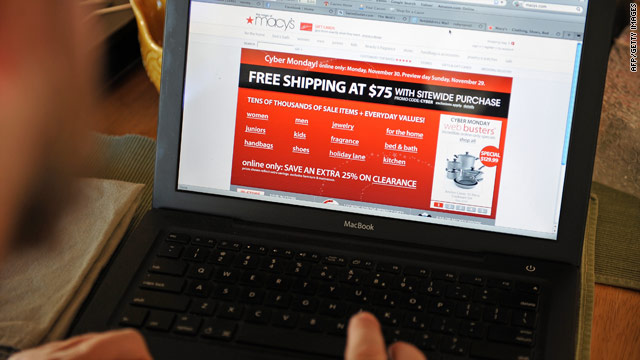
In recent years, a phenomenon marketers call "Cyber Monday" has emerged as a sort of online holiday shopping event. On the Monday after Thanksgiving, legend has it, consumers rush to the internet -- presumably from their workplace computers -- to shop for the rest of their lists.

But experts say that shopping holiday is largely bunk. The internet tracker comScore said Cyber Monday never has been the biggest online shopping day of the year. That day typically comes on a Monday in December, said comScore's senior director of industry analysis, Andrew Lipsman.

Still, the Monday after Thanksgiving is a bigger day for online shopping than either Thanksgiving day -- which has been talked about as the hot new day to shop online -- and Black Friday. Last year, Americans spent almost $900 million at online retail stores on the Monday after Thanksgiving -- compared with $595 million on Black Friday and $300 million on Thanksgiving Day, comScore said.

For people shopping for technology gifts both online and at real stores, there are a number of apps and websites to help the search.

Several websites, like DealNews, RetailMeNot and DealDump, aggregate online shopping deals in one place so consumers can find them.

But a simple internet search for a specific product may be all you need to come up with a good price comparison, said Ramon Llamas, a senior research analyst at IDC, who recommends tech consumers avoid Black Friday entirely.

Smartphone apps and social shopping sites also are empowering consumers in new ways. The apps RedLaser and ScanLife, for example, let users scan product barcodes in brick-and-mortar stores and then see a list of websites that are selling that exact item, often for less money or without sales tax, as Slate's Farhad Manjoo points out.

Llamas said the smartphone is one of the consumer's "most valuable weapons."

"The best thing is you have your handy dandy barcode scanner app," he said. "Let that be your guide. Go to one store, look up the product and say [to a store employee], 'What can you do for me?'"

Consumers should also look for free shipping deals online. More than 40 percent of online transactions in April through June included free shipping, said Lipsman of comScore.

Sites that don't offer free shipping are also likely to lose consumers, he said.

"It's something consumers have come to expect," he said.

Onozawa, the Seattle shopper, is on the lookout for Microsoft's Kinect gaming add-on, an HDTV and maybe an MP3 player this holiday shopping season.

Instead of hunting around stores, he's watching Twitter feeds and browsing websites in hopes that he'll get the best deal.

"I'm already shopping online," he said, adding that it's easier -- and less terrifying -- for him than bumping shoulders with the retail mob.

Apple cuts iPad price to $458

Apple's iPad tablet computer -- one of the hottest items of the holiday shopping season -- got a price cut on the company's website Friday.

People who buy the iPad online Friday will save $41, making the lowest price for the device $458 for a model without a 3G connection and with 16 gigabytes of storage space. The top-end model, with a 3G connection and 64 gigabytes of storage, is also discounted $41, making it $788.

That's about an 8 percent discount on the base-level model and a 5 percent discount on the highest-end iPad.

Those one-day sale prices probably still sound expensive to many consumers, but the Black Friday sale is getting buzz from tech blogs because Apple rarely discounts the price of its high-end electronics and because the iPad is said to be one of the most sought-after gifts of the year.
The iPad was the No. 1 item on the electronics wish lists of kids ages 6 to 12, according to a survey from Nielsen. It was the fourth-most-sought-after item among kids older than 13. Computers, TVs and smartphones were higher on the list for the older kids.
"Given the continued pressure on consumer spending, it is difficult to know how robust a holiday season this will be for tech devices, but this survey suggests the electronics aisle will be heavily traveled this season," that survey said.

Apple also listed discounts for several other items on its website. All of these deals are good until the end of Friday only. Among them:

$101 off the 13-inch MacBook Air

$101 off the MacBook Pro

$101 off the iMac

$41 off the iPod Touch

$21 off the iPod Nano

The site is offering free shipping on orders of $50 or more. The online price cut highlights a trend toward online sales and discounts this holiday season, but the Apple discounts were also available in Apple's retail stores Friday, according to two Apple store employees phoned by CNN.

At least one other retailer appeared to have discounted the iPad, too. At least one T.J. Maxx store was selling the base-level iPad for $400, or $58 less than the price listed at Apple.com, according to the tech blog Engadget, which posted apparent photos showing the in-store-only sale. The same photo was posted by a user on the store's website.

An employee who answered the phone Friday morning at that T.J. Maxx store, in Mount Vernon, New York, told CNN the $400 iPads were sold out.