Tampilkan postingan dengan label style. Tampilkan semua postingan

Selasa, 11 Januari 2011

megapixel camera for 2011

COLOGNE, Germany--For those who find Hasselblad's 60-megapixel H4D-60 camera a little too confining, the company plans to sell a 200-megapixel model in the first quarter of 2011.

The Copenhagen-based medium-format camera maker announced the product today at the Photokina imaging show here. Interestingly, it uses the same camera body as its current H4D-50MS, which will be upgradable, said Peter Stig-Nielsen, director of product development.

However, even in the rarefied air of the medium-format market, where image sensors are very large and very expensive, the 200-megapixel "extended multishot" technology won't appeal to everyone: each shot will take about 30 seconds to capture, restricting the camera to stationary subjects such as cars, watches, and jewelry.

That's because of the design of the Hasselblad multishot-series cameras such as the H4D-50MS. The current model uses tiny piezoelectric motors to shift the sensor a very small amount to combine two shots into one higher-quality image.

"We are now building it into a real product that's going to hit the market in the first quarter of next year," Stig-Nielsen said. "It is going to be an extension of the current H4D-50 multishot."

Most digital cameras capture color with a checkerboard of color filters called a Bayer pattern over image sensor pixels; each pixel captures only red, green, or blue color information. The multishot technology shifts the sensor so the same pixel can capture each of the colors, ridding the camera of the need to mathematically infer the missing values of red, green, and blue.

Hasselblad's new iteration of the technology, called extended multishot, moves the sensor only a half pixel in various directions, which protracts the multishot process from about 20 seconds to 30 seconds. But it quadruples the resolution of a 50-megapixel sensor.


Multishot and extended multishot modes aren't mandatory, of course, a move that would preclude the models from use in fashion photography, one of the biggest markets for this type of camera.

"The cameras we bring out will be able to work in all three modes at the touch of a button," Stig-Nielsen said.

One issue with a 200-megapixel camera is whether lenses can keep up with the tremendous resolving power. If not, they're just capturing blur more precisely. To that end, Hasselblad also announced two new lenses, overhauled designs that improve on earlier models.

First is the HC 50mm-II, an f3.5 model for 2,999 euros (about $4,006). Second is the HC Macro 120-II, an F4 model with a price of 3,420 euros (about $4570). Both are available immediately.

Older lenses will have some trouble keeping up with the 200-megapixel design. "The old models will still work, but they will not give you 100 percent resolution all the way to the corner," Stig-Nielsen said. With the new models, "you will see resolution all the way edge to edge."

Hasselblad underwent tough times, and more are ahead as full-frame SLR cameras from Canon and Nikon encroach on medium-format turf with advantages in cost, flexibility, low-light sensitivity, accessories, and ease of use. And Hasselblad has had trouble with customer service and delivering the cameras it promises.

But things have improved for Hasselblad.

"In the first eight months of the year, we have had a profitable turnaround," said Chairman Larry Hansen. The period has been "very successful for Hasselblad," he said.

Two factors in the company's better fortunes were an improving economy and restructuring that reduced Hasselblad expenses. But the biggest factor was the "the success of the H4D platform," he said.

Hasselblad's H4D is an integrated system that builds the sensor into the camera body like a conventional SLR. In contrast, earlier film and digital medium-format cameras use a removable back that lets photographers upgrade or change the sensor without changing the camera body.

The design shift hurt a Hasselblad competitor, Phase One, which manufactures such digital backs. Consequently, Phase One acquired a controlling interest in Mamiya, a venerable Japanese medium-format camera company, and sells its camera bodies under the Phase One brand name.

In addition, Phase One acquired another digital camera back maker, Leaf, which at Photokina announced a new 80-megapixel medium-format back.

In these markets, brand is still important even if sales are the merest sliver of the overall camera market. To that end, Hasselblad also announced it's building a limited series of 499 H4D cameras that draw on the clout of another boutique brand, Ferrari.

The special series of cameras sport the Ferrari logo and the gleaming red "rosso fuoco" color of new Ferrari sports cars.


Twitter and youtube in North Korean

The Twitter and YouTube accounts held by the North Korean government were hijacked over the weekend and used to post messages critical of the regime and mocking North Korea leader Kim Jong-Il's heir apparent, Kim Jong-Un.

The official Twitter account for North Korea posted messages on Saturday, the day of Jong-Un's birthday, calling for an uprising and criticizing him for reportedly hosting lavish parties while North Koreans starve, Reuters reported.

Meanwhile, an animation appeared on the regime's YouTube channel the same day showing Jong-Un mowing down impoverished women and children in a sports car, the report said. The posts and video were removed but another copy of the video was still accessible.

Members of a North Korean Internet forum, DC inside, have claimed responsibility for the prank, according to reports.

The hijackings come as North and South Korea prepare to begin talks at the end of the month. Last year in November a group of South Koreans were killed on Yeonpyeong island during an exchange of artillery fire and in March a South Korean military ship was torpeadoed.

Minggu, 09 Januari 2011

Anti Sosial Of Sosial Media

Portland, People walking by the floor-to-ceiling glass windows surrounding Cristin Norine could be excused for thinking that she is working in an office alone or lives in a ground-level apartment in dire need of drapes.

She does not look like a prisoner.

But for 30 days that's exactly what Norine is. Her "cell" is a large storefront that sat unrented for months until the owner decided to let artists use it as a gallery so it wouldn't look so empty.


Norine has moved in donated furniture, exercise equipment and a large-screen computer with a projector overhead so everyone walking by can see as she tweets, updates her Facebook page and Skypes.

During her stay no one comes in and Norine never goes outside. Her only contact with other people is through technology.

In that regard, Norine says she is not that different from anyone else.

"We think we are being social on these gadgets," she said. "And it can be a really great thing when people live in different states, but when you are at dinner or you are trying to have a conversation and you are being distracted by these other things. Or maybe you are just not going out as much because you are staying home and are online."

Usually a TV and photography production manager based in Los Angeles, California, Norine ended up in her own personal fishbowl in Portland after a chance meeting with Josh Elliott.
Elliott worked in photography in Oregon and the two realized they shared a similar curiosity about the effects that the barrage of new technologies are having on people.

Elliott knew about the available storefront and almost overnight, Norine moved in.

The Public Isolation Project was born.

As she literally X's off the 30 days she is spending cut off from the world, Norine chronicles her experience through her blog http://www.publicisolationproject.com/.

On the other side of the glass, Elliott is filming a documentary on their collaboration.

They are not anti-technology, Elliott says, just hoping to inspire more conversation about how everything from the internet to iPads are shaping people's lives.

"We are accessible 24/7," Elliott says. "Having a cell phone in your pocket you can be called or texted or video chatted at any point. With Facebook you are updating all time. You have friends on Facebook that you have never met, and they know more about what's going on in your life than your mother does who is not on Facebook."

Norine puts herself out there in a way that would make the most avid Twitterer or Facebook addict suffer an attack of shyness.

She eats, exercises and sleeps in full view of a busy Portland street. With a bathroom as her only private area, she is on almost constant display.

Norine's exhibitionism is extreme but hardly unique. Last month, the Chicago Museum of Science and Industry held a prize for a contestant to move to the museum for a month and become a living exhibit. Some 1,500 people applied.

In 2004, a Malaysian woman set a record for enduring 32 days in a glass box with hundreds of scorpions as company. In 2000, an actress living in a glass house in Chile inspired protests after taking public showers.

Elliott says the near total lack of privacy takes a toll on Norine.
"Even on a Sunday when she just wants to take a break from this and have a cup of coffee," he said, "There's people coming up and knocking on the window. She just doesn't have any time for herself and I think that's hard."

Norine admits she didn't think she would make it past two weeks and has what she calls "the bad days."

On day 16 of her blog she writes, "Went to bed before 9 p.m. I wasn't feeling well and was too tired to write. ... I could really use some fresh air."

But she says having a routine has made the experiment more bearable.

"I get up, I make myself coffee and breakfast and get ready." Norine says. "Some days I'll be working out. Then I get on the computer and do my work -- I try to take a lunch break. I even have people who will come and have lunch with me on the other side of the window."

Norine e-mails and Skypes and chats online with anyone who wants to know more about her and the project. Until, she says, the overload sets in.

"I'll realize I need to take a break," Norine says. "And I'll go and do something that doesn't have to do with the computer and I can't turn it off. I still hear those dings and I get drawn back to the computer. I definitely have noticed since I have been here that I am addicted!"

The project ends on December 1 and Norine says she yearns for human interaction, a good meal and to hear live music.

Even if Norine can't wait to leave her self-imposed prison, she and the project have changed the surrounding neighborhood.

People who walk by her every day on their way to work stop for a few brief seconds to wave hello.

Day laborers awaiting work across the street watch her moving around the living space as if it were a favorite soap opera.

New friends pop by and hold notes against the window.

A woman who only gives her name as Debra watches Norine intently for several minutes before saying, "I know what it's like: I have an infant and I get stuck in my house all the time and I find myself so hungry for adult conversation."

Minggu, 05 Desember 2010

smartphones in December

f you're in the market for a new smartphone, you might want to keep a close eye on Best Buy's latest offer.

The company announced today that through the rest of December, it will be offering at least four models of smartphones for free in its brick-and-mortar stores, online, and in its mobile specialty shops. All four major carriers--Verizon, AT&T, T-Mobile, and Sprint--are included in the offer. The company said it decided to launch the program after enjoying a successful "Free Phone Fridays" campaign in October.

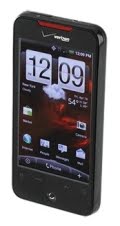
The devices Best Buy plans to offer include the HTC Droid Incredible, the LG Optimus, and RIM's BlackBerry Curve, among others.

But as with most deals, there is a catch. To get a free device, consumers will need to either enter into a two-year contract or upgrade their current line with a new two-year agreement.

Senin, 29 November 2010

Samsung M5650 Survey

Samsung M5650 Lindy structures design similar Corby S3650. The interface was also still relying on Cartoon UI, which has capacitive touchscreen TFT display as a primary access medium. In addition, Lindy M5650 panel also dedicate multimedia at the bottom line of the call / endcall to show multimedia capabilities.

The features, recorded The M5650 Lindy has better facilities than Corby Touch. Look the HSDPA network, to access the data can reach 7.2 Mbps. In addition, Samsung M5650 Lindy has also been equipped with track Wi-Fi connection beside Bluetooth and data cable MicroUSB.

In the entertain sector, this phone includes 3.2 MP powerful camera plus autofocus capability. There are also video and music player that has the ability to extract information about the song, via the Find Music feature recognition.

Samsung M5650 Lindy provides adequate facilities and attractive form of cool widget application for Facebook, MySpace and Twitter. The Services includes photo / video upload into the Youtube, Flickr, Picasa and Photobucket.

The plan, the phone will be marketed end of the year with an estimated price of 149 EURO.

Specifications:
Network: Quadband GSM and HSDPA 1900/2100 MHz; dimensions: 10.6 x5, 7×1, 2 cm Weight: 98 g; screen: 2.8 inch, TFT 262,144 color capacitive touchscreen, 240×320 pixels; Data transfer: HSDPA 7.2 Mbps, EDGE 10 , GPRS 10; Camera: 3.15 MP, 2048×1536 pixels, autofocus, video recording; Internal Memory: 50 MB; External Memory: microSD up to 8GB; messaging: SMS MMS, e-mail, IM;

Connectivity: Wi-Fi 802.11 b / g, Bluetooth v2.1 (A2DP support), microUSB data cable, 3.5 mm audio jack; Browser: WAP 2.0/xHTML, HTML;

Other Features: Polyphonic (MP3), MP3/WMA/eACC + player, H.263/H.264/MP4/WMV player, Find music recognition service, DNSe, social networking integration with live updates, Smart unlock, Cartoon UI, Dedicated music keys, wid RDS FM radio, java MIDP 2.0, Phonebook 1000 entries, Organizer, Document viewer, Voice memo, Speaker phone, Games; Battery: 960 mAh lithium ion; Standby: 300 hours, Talk time 3 hours

LG Apex Slide

LG Apex is U.S. Cellular’s latest high-performance, Android-powered device. The LG Apex, with its vibrant 3.2″ touchscreen and sleek, slide-out QWERTY keyboard, joins a string of cutting-edge products recently launched by the carrier, including the HTC Desire, Samsung Acclaim, Samsung Mesmerize (a Galaxy S smartphone) and the upcoming Samsung Galaxy Tab, slated to arrive in stores this month. The LG Optimus U will debut in December rounding out U.S. Cellular’s Android-powered offerings for 2010.
LG Apex Specs

LG Apex is a cool productivity tool that runs on Android 2.1 and features a 3.2-inch durable tempered glass touchscreen that responds to a feather touch with vibration feedback. The screen also boasts luminous sensors that adjust brightness depending on light conditions and shows off the dynamic, animated live wallpaper. Five customizable home screens allow customers to create shortcuts to their favorite apps and widgets. Its stylish and functional design offers a QWERTY keyboard that slides out to make typing and texting easy.

Backed by U.S. Cellular’s high-speed nationwide network, customers can browse and download thousands of applications in Android Market that allow users to customize their phone to fit their lifestyle. Customers can also access popular Google applications, including Google Maps™ with its turn-by-turn directions and Google Voice Search™ that helps them locate anything without a single key tap. The LG Apex’s 3 megapixel autofocus, flash-ready camera/camcorder comes with a panorama mode that lets customers take up to six side-by-side shots to build a sweeping view.

LG Apex is a Wi-Fi enabled phone also comes with an MP3 player, and customers can easily organize their music library, repeat and shuffle their favorite songs. They can even multi-task, playing music in the background while simultaneously e-mailing, texting or downloading videos. A video player is included for WMV, MP4, 3GP and 3G2 formats.
LG Apex Price

The LG Apex will retail for $80 after an $80 mail-in rebate and will be available Nov 19 at US Cellular locations.

New Nokia N8

The Nokia N8 comes with an array of applications such as free global Ovi Maps walk and drive navigation, making this the perfect substitution for a Satellite Navigation system. The Nokia N8 boasts to take you exactly where you want to be, it also features information on 70 worldwide destinations, making it a great handset for those that love to travel.

The Nokia N8 offers an impressive total of 16GB of in-built storage space, however, if you desire even more storage this is in fact expandable up to a total of 48GB, which is available via the use of a Micro SD card. This enables users to send and transfer large files to a memory stick through the USB On-the-Go device.

Such a declaration is offering developers a new platform to work from. The Nokia N8 also comes complete with Qt, which is a software development environment that in actual fact simplifies the development. Such software makes it possible to create applications just once and then organize them across other software platforms, such as Symbian for example.

In order to enable developers to start grasping the prospective of Qt, Nokia has also made the simple to use Nokia Qt SDK available in its initial form.

The Nokia N8 will be going live late in 2010 and will be released only to select markets.

The Nokia N8 introduces the global device unveiling of the new Symbian 3 software; such software features an assortment of major developments and improvements. These improvements include a total of three personal homescreens, each are easily scrolled through by a simple touch of the screen.

A selection of improved usability options are also available, which feature across the user interface and include elements such as ‘pinch-to-zoom’ options and single tap and multi-tap support motions. Due to the new 2D and 3D graphics architecture, both quicker and more amenable user interface is available; this takes complete advantage of the all-new hardware acceleration. More applications can be run alongside one and another due to the highly efficient memory management, allowing users to multi-task with ease.

If you’re looking to buy the new Nokia N8, then check out www.phones4u.co.uk and find yourself the best deal.

Powerfull BlackBerry

With the launch of the Blackberry Torch in August of this year, there was much talk of what new features would be introduced to the new Blackberry 6 web browser. The browser in Blackberry Torch, while not being viewed as the most important aspect of Blackberry’s impressive arsenal of features, is obviously an important part of a smart phone and the impressive browsers on Apple’s iPhone and on certain high end Android phones mean that Research in Motion have had to act on their latest model. RIT have seemingly not shirked from this responsibility and have introduced some impressive new features to their browser.

One of the key features of the browser which has been lauded by Blackberry’s spokespeople has been that of the browser’s integration with the social feeds application on the Blackberry Torch. Blackberry users have, for a long time been able to add RSS feeds to their browser. With Blackberry 6 though, this option has become a much more simple, engaging and fun experience, adding, finding and reading new feeds.

The “Browser Options” screen has also undergone a facelift with the previous incarnations being criticised for being hard to manoeuvre around and confusing. The new version has, along with having it’s look change, been streamlined by having options that are no longer required (mainly due to improvements in performance) removed meaning that the options section of the browser works a lot more smoothly and is more user friendly.

With the new and improved touch screen also, comes new and improved features that dramatically impact on the performance of the browser. The new browser is now a lot more interactive with users now able to zoom and pinch the interface using the touch screen with the browser now reacting a lot more smoothly than it has in the past. Also, in order to help users read content that is more text heavy RIM have introduced an Automatic Font Size Adjustment” feature which mean users can quickly resize and confine the web based content to the width of the screen.

To read the latest review on the Blackberry Torch, visit Dial-A-Phone and also check out the latest news on their superb mobile phone and technology blog.

Minggu, 28 November 2010

Futuristic touch screen puts the desk in desktop

The future just keeps getting closer and closer these days. Not only do we have iPhones with FaceTime--which, when combined with the iPod Nano (as I'm sure they will be before too long) will come pretty close to creating a mass-market version of Dick Tracy's 2-way wrist TV--we've also got robot cars and, ahem, robot journalists (which I'm trying to keep at bay by way of this terribly sophisticated and never-ending sentence--apparently the roboscribes have trouble with such Proustian gymnastics: Quick! They're coming for our jobs! Hand me another semicolon and an em dash!).

And too, we've got Minority Report-like gesture-driven interfaces and now this: a multiuser touch screen the size of a desk, which curves up to create a, well, desktop like the metaphorical one you may be staring at right now.

Cool!

I realize some of you will scoff at this device--whipped up by The Media Computing Group at Germany's RWTH Aachen University, and brought to my attention by Engadget--but I freely admit that it fires my imagination.

I can see it combined with the type of Wacom pen-and-tablet device that lets you "draw" directly on screen. As a sometime graphic designer, I'd be in nirvana. I could hunch over in a hard-working, tortured artist kind of way and draw a picture or manipulate a Photoshop file, save a version of it, and then whisk that version across the (horizontal) desktop to see it curve up onto the (vertical) desktop that would now be a perfect bulletin board.
(Credit: Media Computing Group)

I can see it incorporating the aforementioned gesture-driven technology to allow me to sit back and point at the drawings on my bulletin board to choose the ones I like: I could snap my fingers, say, and preserve those files; then--I don't know--dismiss the rejects with a disdainful backhanded wave and watch them burst into unbelievably lifelike flames courtesy of a supercharged graphics card or an up-and-coming 3D Web technology like WebGL. A client meeting was never so much fun! It's a multiuser device: I could set the client's favorite drawings ablaze, and she could ignite mine! We could create a new videogame! I'd let her win! I'd have to! She's now my only source of income--my journalism job having been stolen by R2-D2!

But enough of my overheated holiday-weekend imaginings; irrelevant asides about robots; and tiresome, tiresome, tiresome--tiresome--syntactical pyrotechnics. Why don't you take a look at the video and share with us your own brilliant vaporware in the comments section below?

(And, yes, I know, we've already had at least one real-life interpretation of the Dick Tracy gadget--and for a long time now. See? I told you the future just keeps getting closer. So close it's become the past. Feel free to point out if and where the technology mashup I've conjured already exists--and when it appeared.)

Sabtu, 27 November 2010

Apple cuts iPad price to $458

Apple's iPad tablet computer -- one of the hottest items of the holiday shopping season -- got a price cut on the company's website Friday.

People who buy the iPad online Friday will save $41, making the lowest price for the device $458 for a model without a 3G connection and with 16 gigabytes of storage space. The top-end model, with a 3G connection and 64 gigabytes of storage, is also discounted $41, making it $788.

That's about an 8 percent discount on the base-level model and a 5 percent discount on the highest-end iPad.

Those one-day sale prices probably still sound expensive to many consumers, but the Black Friday sale is getting buzz from tech blogs because Apple rarely discounts the price of its high-end electronics and because the iPad is said to be one of the most sought-after gifts of the year.
The iPad was the No. 1 item on the electronics wish lists of kids ages 6 to 12, according to a survey from Nielsen. It was the fourth-most-sought-after item among kids older than 13. Computers, TVs and smartphones were higher on the list for the older kids.
"Given the continued pressure on consumer spending, it is difficult to know how robust a holiday season this will be for tech devices, but this survey suggests the electronics aisle will be heavily traveled this season," that survey said.

Apple also listed discounts for several other items on its website. All of these deals are good until the end of Friday only. Among them:

$101 off the 13-inch MacBook Air

$101 off the MacBook Pro

$101 off the iMac

$41 off the iPod Touch

$21 off the iPod Nano

The site is offering free shipping on orders of $50 or more. The online price cut highlights a trend toward online sales and discounts this holiday season, but the Apple discounts were also available in Apple's retail stores Friday, according to two Apple store employees phoned by CNN.

At least one other retailer appeared to have discounted the iPad, too. At least one T.J. Maxx store was selling the base-level iPad for $400, or $58 less than the price listed at Apple.com, according to the tech blog Engadget, which posted apparent photos showing the in-store-only sale. The same photo was posted by a user on the store's website.

An employee who answered the phone Friday morning at that T.J. Maxx store, in Mount Vernon, New York, told CNN the $400 iPads were sold out.

Jumat, 26 November 2010

Google wants you to eat Brussels sprouts

Looking for last-minute recipes? You won't have to search further than Google.com.

The search engine turned its logo on Thursday into an interactive smorgasbord of Thanksgiving foods -- each of which links to a recipe.

Among the choices are roasted Brussels sprouts, which isn't exactly an American favorite. The recipe comes from the TV chef Ina Garten, perhaps better known as the "Barefoot Contessa," and includes a bunch of salt and olive oil.

You could make these looked-down-upon veggies more delicious by turning to other websites, too. You could add bacon, as The Food Network's Rachael Ray suggests. Or go the southern route -- a la celebrity chef Paula Deen -- and pour in a cup of melted butter.

The other Google "doodle" recipes sound a little tastier. They include: roast turkey, smashed sweet potatoes, popovers, cranberry fruit conserve and a pumpkin banana mousee tart.

It's clear that many people in the United States were turning to the internet for advice about food and Thanksgiving on Thursday morning. All of the top 10 "hot searches" on Google were focused on the holiday. Six of them were focused on cooking, with some of the popular searches including "butterball turkey cooking instructions" and "butterball turkey hotline."

Last Thanksgiving, the New York Times used search data from Allrecipes.com to compile a fascinating look at regional cooking trends. Based on the foods people were searching for, it appears that few people in the northeast United States like pecan pie. Macaroni and cheese is a southern Thanksgiving dish. And pumpkin pie, which was the second most popular search term overall, is a hot dish in the Pacific northwest (although, you could serve it cold).

The San Francisco Chronicle noted that the Google recipes are hosted by that website -- so instead of linking out to recipes on cooking sites, Google keeps the Web traffic squarely on Google.com.

"So, on Thanksgiving, Google is competing with every other recipe site on the web, and is once again, officially, a media company," the paper writes.

For more on Thanksgiving and food, check out CNN's Eatocracy blog and CNN iReport, where you can share recipes and stories of your own.